Through NORDTECH support, RPI offers students hands-on workforce development experiences that connect classroom learning with real-world applications in semiconductors, chip design, microelectronics, and related technologies. Across programs ranging from chip design and cleanroom education to immersive AR/VR and interdisciplinary STEM experiences, students have opportunities to build technical skills, work on real projects, collaborate in teams, and develop the communication and problem-solving skills needed to pursue careers in the semiconductor industry.
For NORDTECH funded education and WFD programs, contact: Darrilyn Di Nardo, dinard@rpi.edu, NORDTECH WFD Coordinator
RPI STEAMM (Science, Technology, Engineering, Arts, Mathematics, Medicine) Inventor Studio
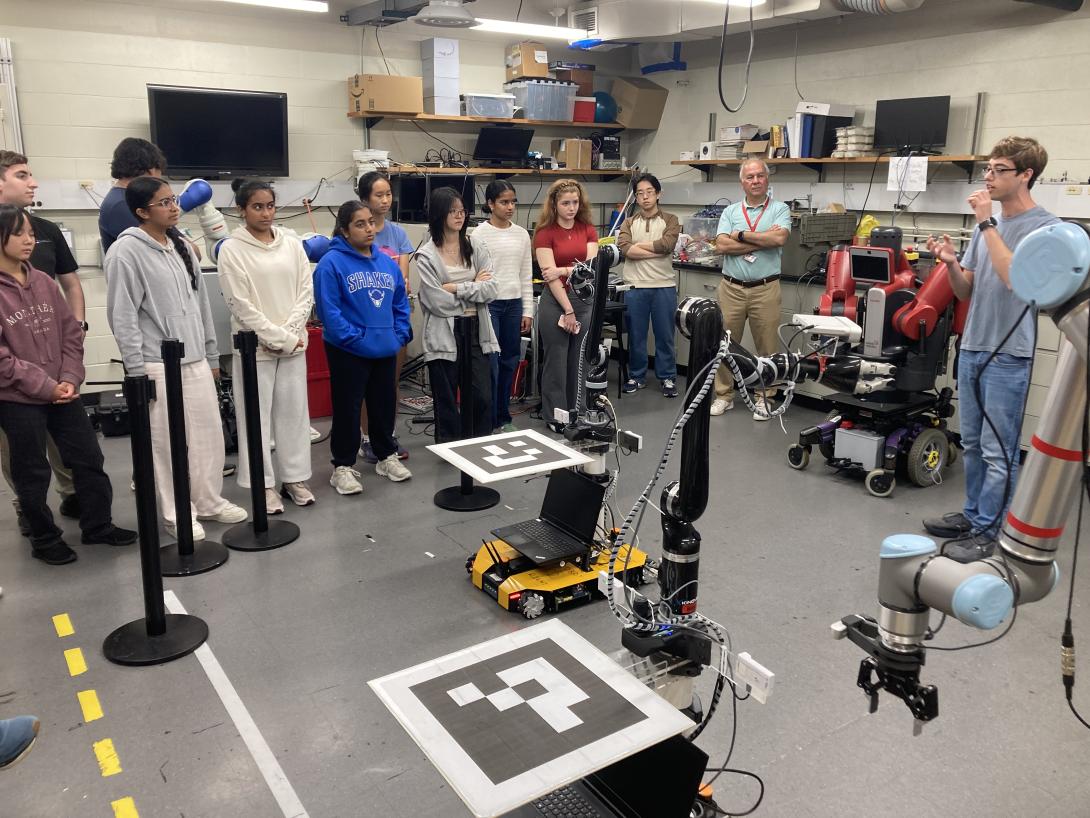
RPI STEAMM (Science, Technology, Engineering, Arts, Mathematics, Medicine) Inventor Studio Students
RPI STEAMM (Science, Technology, Engineering, Arts, Mathematics, Medicine) Inventor Studio is for students in grades 9-12. Participants explore cutting-edge interdisciplinary topics and career paths that integrate disciplines in STEAMM. This project-based program combines hands-on discovery with classroom learning. The program facilitates students to think outside the box and go beyond a single discipline, realizing their potential as interdisciplinary engineers and scientists. Over the course of two weeks, participants learn about a variety of undergraduate majors and career paths from a team of RPI faculty working across departments. Students also work on small-group projects and present their research and findings at the conclusion of the program, placing strong focus on developing effective written technical communication and presentation skills.
For more information contact Casey Hoffman, PhD: hoffmc4@rpi.edu
RPI Open Chips Design
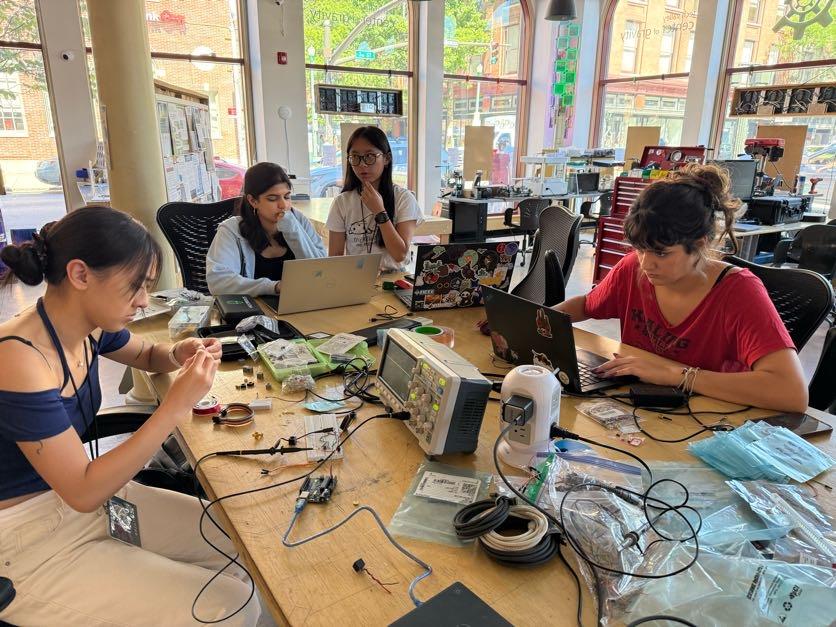
RPI Open Chip Design Program, Quantum Chip Design students
Working to advance a holistic Open Chips Design workforce that engages students early and meaningfully in semiconductor chip design, RPI provides a multi-prong approach.
Open-Source Quantum Sensors:
This team has developed a prototype quantum sensor based on diamond nitrogen vacancy centers, building upon the low-cost, open-source Uncut Gem design from Quantum Village. They participate in conferences and hackathons such as DEF COM and won first and second in the Hacksense 2026 hackathon held at the Tech Valley Center of Gravity in Troy, NY.
For more information contact Brian McDemott, PhD: mcderb2@rpi.edu
Experiential Learning Module:
This approach introduces freshmen in the Introduction to ECSE course an in-depth review of the semiconductor industry and its importance to the global economy. By the end of this course students produce a fully verified IP block layout, the verified blocks get placed together on a die and multiplexed. The result, we tapeout the full die, meaning every students gets their design manufactured.
For more information contact Alex Patterson, PhD: pattea5@rpi.edu
FPGA Based Inference Accelerator:
FFN Acceleration: this team-based capstone project focuses on FPGA-based design and prototyping of a RISC-V CPU, providing hands-on experience in hardware architecture, HDL-based implementation, verification, and system integration, and prepares students for careers in computer hardware / chip design. The goal of this project is to lay the ground-work for an RISC based FPGA inference accelerator and examine the PPA of an optimized FFN pipeline.
For more information contact Liu Liu, PhD: liu.liu@rpi.edu
Low-Power Zero-Knowledge Proof Acceleration:
This project introduces students to digital chip design through an emerging application at the intersection of semiconductors, cybersecurity, and privacy-preserving computing.
The long-term goal is to develop reusable intellectual property for an extremely low-power zero-knowledge proof (ZKP) system targeting mobile and other energy-constrained applications. Such hardware could eventually enable secure digital identity, privacy-preserving authentication, and future payment applications without requiring users to disclose the underlying private information being verified.
For more information contact Kanad Basu, PhD: basuk@rpi.edu
RPI Microelectronics AR/VR
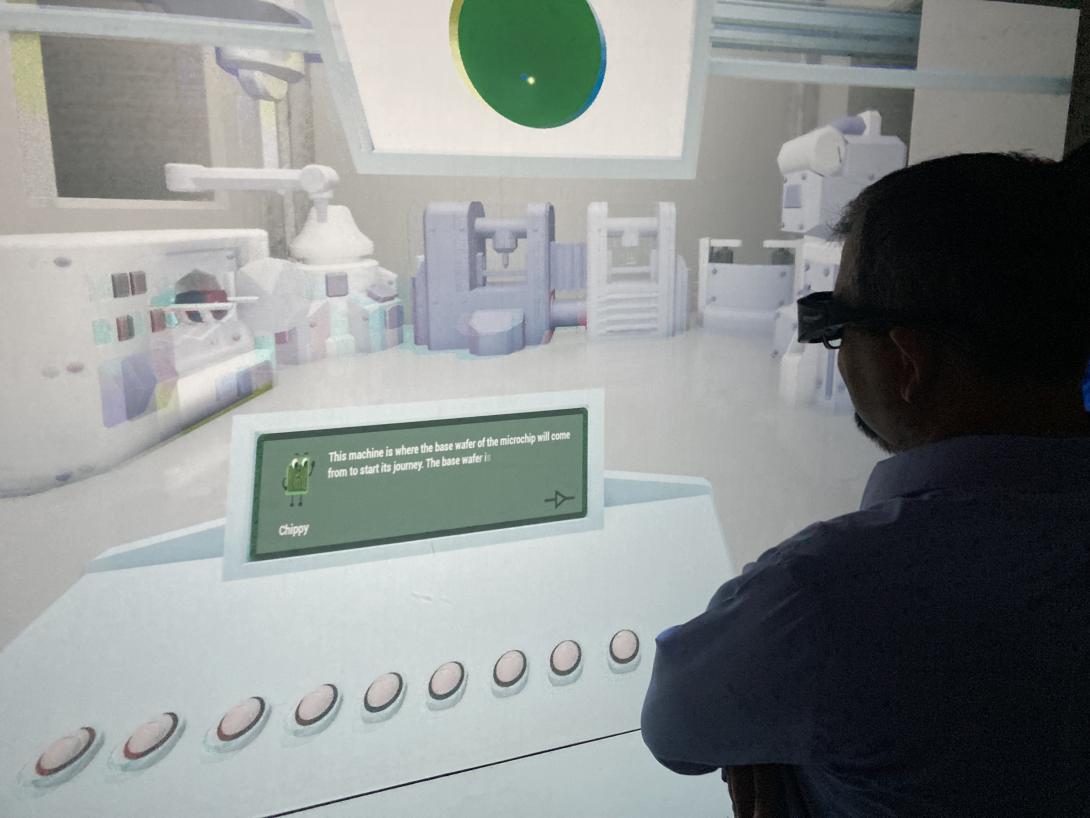
RPI Microelectronics AR/VR Game Design
Through funding assistance from NORDTECH, the AR/VR initiative at RPI is transforming cleanroom education. Access to cleanroom environments and microfabrication processes, is improving learner confidence and technical readiness. In addition to the 12+ training modules that use VR technology and Meta headsets, RPI has produced an immersive module scalable for large groups 20+. The most recent addition is an interactive augmented reality educational game that introduces students to semiconductor fabrication, digital logic, and chip design through three complementary mini-games.
The game is delivered on RPI’s “The Cave,” a large immersive display that extends across the floor beneath participants and bends 90 degrees upward along the wall in front of them.
For more information contact Darrilyn Di Nardo: dinard@rpi.edu